
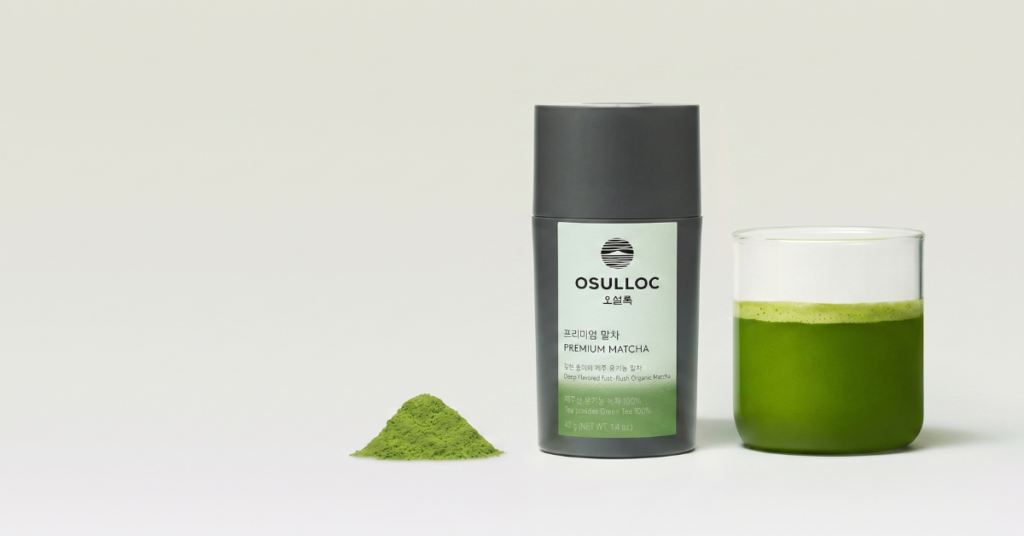
OSULLOC Premium Matcha Review: Is Jeju’s Volcanic-Soil Matcha Worth the Hype?
If you’ve spent any time exploring Korean wellness culture, you’ve likely come across OSULLOC — the brand that put Jeju Island tea on the global map. Their Premium Matcha (sold internationally as OSULLOC Volcanic Isle Matcha, ceremonial grade) has developed a loyal following among people who tried cheap matcha once, found it bitter and chalky, and swore off the whole category. This review takes a close look at what’s actually in the tin, how it’s grown, what the science says about matcha’s wellness reputation, and whether this particular one earns its premium price tag. We’ll also cover exactly how it compares to the cheaper, mass-produced matcha you’ll find at most grocery stores, since that comparison is really what determines whether the extra cost is justified for your own routine.
The Tradition and Science Behind Jeju-Grown Matcha
Jeju Island sits on volcanic bedrock, and its mineral-rich, well-draining soil is part of what makes it one of the more distinctive tea-growing regions in Asia. OSULLOC has cultivated tea fields on Jeju since the 1980s, and their matcha line draws on decades of institutional knowledge about how the island’s climate — mild, humid, and moderated by the surrounding ocean — affects leaf development.
Matcha itself isn’t a separate plant from regular green tea; it’s the same Camellia sinensis, processed differently. Roughly three to four weeks before harvest, the tea bushes are shaded from direct sunlight. This single step is responsible for most of matcha’s signature qualities:
- Shading slows photosynthesis, which increases chlorophyll production — this is what gives high-quality matcha its intensely vivid green color rather than a dull, yellowish tone.
- It reduces the formation of catechins that create bitterness, while boosting L-theanine, an amino acid associated with matcha’s smoother, subtly sweet, umami-forward taste.
- After harvest, the leaves are steamed, dried, de-stemmed, and stone-ground into an extremely fine powder — a slower and more labor-intensive process than producing standard loose-leaf tea.
OSULLOC positions this particular matcha as a ceremonial-grade product, which generally signals finer leaves, a finer grind, and a flavor profile suited to drinking the tea on its own — not just as a flavoring agent buried under sugar and milk. It’s also worth noting the product is USDA Organic Certified and Rainforest Alliance Certified, with a short, transparent ingredient list: 100% organic green tea powder, nothing else added.
How It Compares to Everyday Grocery-Store Matcha
Most of the matcha sold at large grocery chains falls into what’s called “culinary grade” — it’s made from lower, more mature leaves that are harvested later in the season, shaded for a shorter window (or not at all), and ground more coarsely on industrial equipment. That’s not automatically a bad thing; culinary-grade matcha is intended to be mixed into baked goods, smoothies, or heavily sweetened drinks where a stronger, more bitter tea flavor can stand up to other ingredients. The problem is that a lot of it gets marketed and sold as if it’s suitable for drinking straight, which is where most people’s first bad matcha experience comes from.
Ceremonial-grade matcha like this OSULLOC product is a different category entirely. The younger leaves, longer shading period, and finer stone-ground texture mean it dissolves more smoothly, foams better when whisked, and doesn’t need sugar or milk to be palatable. If you’ve only ever tried the tub of bright-green powder from a big-box grocery aisle, the difference in a single sip is usually enough to explain the price gap.
Matcha’s wellness reputation isn’t just marketing — but it’s worth being precise about what the research actually supports, rather than repeating vague wellness-industry claims.
- Concentrated antioxidants. Because you consume the whole ground leaf rather than steeping and discarding it, matcha delivers a higher concentration of catechins — particularly EGCG (epigallocatechin gallate) — than steeped green tea. Catechins are polyphenol antioxidants that have been studied for their role in supporting cellular health.
- Calm, sustained energy. Matcha naturally contains caffeine, but it’s typically paired with L-theanine, an amino acid that’s been studied for promoting relaxation without drowsiness. Many people report that matcha’s energy feels steadier and less jittery than coffee, likely due to this caffeine-L-theanine combination, though individual responses to caffeine vary.
- A mindful ritual. Beyond the biochemistry, there’s real value in the act itself — sifting the powder, whisking it by hand, taking a few minutes to prepare a drink intentionally instead of grabbing something on the way out the door. For many people building a wellness routine, that ritual matters as much as any nutrient.
It’s important to stay realistic here: matcha is a food product, not a treatment for any medical condition, and results or benefits can vary significantly from person to person. If you’re pregnant, nursing, sensitive to caffeine, or managing a health condition, it’s worth talking to a healthcare provider before making matcha a daily habit — especially given how concentrated matcha’s caffeine content is compared to steeped tea.
How to Use OSULLOC Premium Matcha
One thing that separates a good matcha from a disappointing one is technique. Even premium matcha can taste clumpy or bitter if it’s prepared wrong. Here’s how to get the most out of this particular product.
Classic Matcha (Usucha-Style)
- Sift 1½ tsp (about 3g) of matcha powder into a bowl or cup — this prevents clumping and is worth the extra 20 seconds.
- Add roughly 10 fl oz (300 mL) of water, either warm (not boiling — around 160–175°F) or cold.
- Whisk briskly in a “W” motion with a bamboo whisk (chasen) until a light foam forms on top. A milk frother works in a pinch if you don’t have one.
Matcha Latte
- Whisk 1½ tsp (3g) matcha with a small splash of hot water first to form a smooth, lump-free paste.
- Add about 6 oz (180 mL) of hot or cold milk — dairy or plant-based both work well.
- Stir or froth to combine, and sweeten to taste if you like.
Matcha Ade (Iced & Sparkling)
- Whisk the matcha paste as above, then pour over ice.
- Top with sparkling water instead of milk for a lighter, refreshing version.
- A little honey or simple syrup balances the flavor nicely if you prefer it sweeter.
Storage Tips
Matcha degrades faster than most people expect — light, heat, air, and moisture are all enemies of that vivid green color and fresh flavor. Keep the tin sealed tightly, store it in the refrigerator or a cool, dark pantry, and try to use it within a few weeks of opening for the best flavor, even though the sealed shelf life is considerably longer.
Who This Matcha Is Best For
Not every matcha is right for every person, so it’s worth being specific about who gets the most value out of this particular tin:
- Former matcha skeptics. If a bitter, chalky cup turned you off matcha years ago, this is a reasonable product to give the category a second chance with.
- Coffee-to-tea switchers. Anyone trying to cut back on coffee’s harsher jitters will likely appreciate the steadier, calmer lift matcha tends to provide.
- Home baristas. The fine grind and clean flavor hold up well in both hot and iced lattes, so it’s a good pick if you like experimenting with café-style drinks at home.
- Clean-label shoppers. With USDA Organic and Rainforest Alliance certification and a single-ingredient list, it’s a straightforward choice for anyone who prioritizes minimally processed, traceable food products.
On the other hand, if you mainly want matcha as a background flavor for baking or smoothies where a stronger, more assertive taste is actually preferable, a culinary-grade matcha will do the job for less money — save the ceremonial-grade tin for drinking on its own.
Final Verdict
For anyone who has been burned by low-grade, bitter matcha and assumed the whole category wasn’t for them, this is a genuinely good place to start over. The shade-growing process and fine, stone-ground texture show up clearly in the cup — smoother, less astringent, and more versatile across hot, iced, and latte preparations than budget alternatives. It’s not the cheapest matcha on the market, but between the Jeju provenance, organic certification, and consistent quality, it’s a reasonable premium to pay if matcha is becoming a regular part of your routine rather than a one-off experiment.
The bigger-picture takeaway is that “matcha” isn’t one uniform product — grade, growing method, and grinding technique all shape what ends up in your cup, and this is a clear example of what the ceremonial-grade end of that spectrum tastes like when it’s done well. Whether it’s worth the price ultimately comes down to how often you’ll actually use it and whether you’re drinking it straight or folding it into recipes.
Here’s where you can pick this up — OLIVE YOUNG US ships to US residents only, while OLIVE YOUNG Global ships worldwide excluding the US:
These are affiliate links; we may earn a commission at no extra cost to you.
Frequently Asked Questions
Is OSULLOC Premium Matcha ceremonial grade?
Yes. It’s marketed as ceremonial-grade matcha, meaning it’s made from young, shade-grown tea leaves and finely stone-ground for a smoother flavor suited to drinking on its own, not just as a flavoring in recipes.
Does it contain any allergens?
The ingredient list is 100% organic green tea powder with nothing else added. However, it is manufactured in a facility that also processes milk, soy, peanut, and wheat, so those with severe allergies should take that into account.
How long does matcha stay fresh once opened?
The sealed shelf life is about 1 year and 6 months from the manufacturing date, but for the best color and flavor, it’s best to store the tin sealed in the refrigerator or a cool, dark place and use it within a few weeks of opening.
🌿 Weekly wellness, health & beauty insights — straight to your inbox
Free subscription · Cancel anytime